Colostrum in Midlife Wellness: Hype or Helpful?
Anna Harrelson • June 13, 2025
What the science says about this trending supplement—and when it might be worth it.
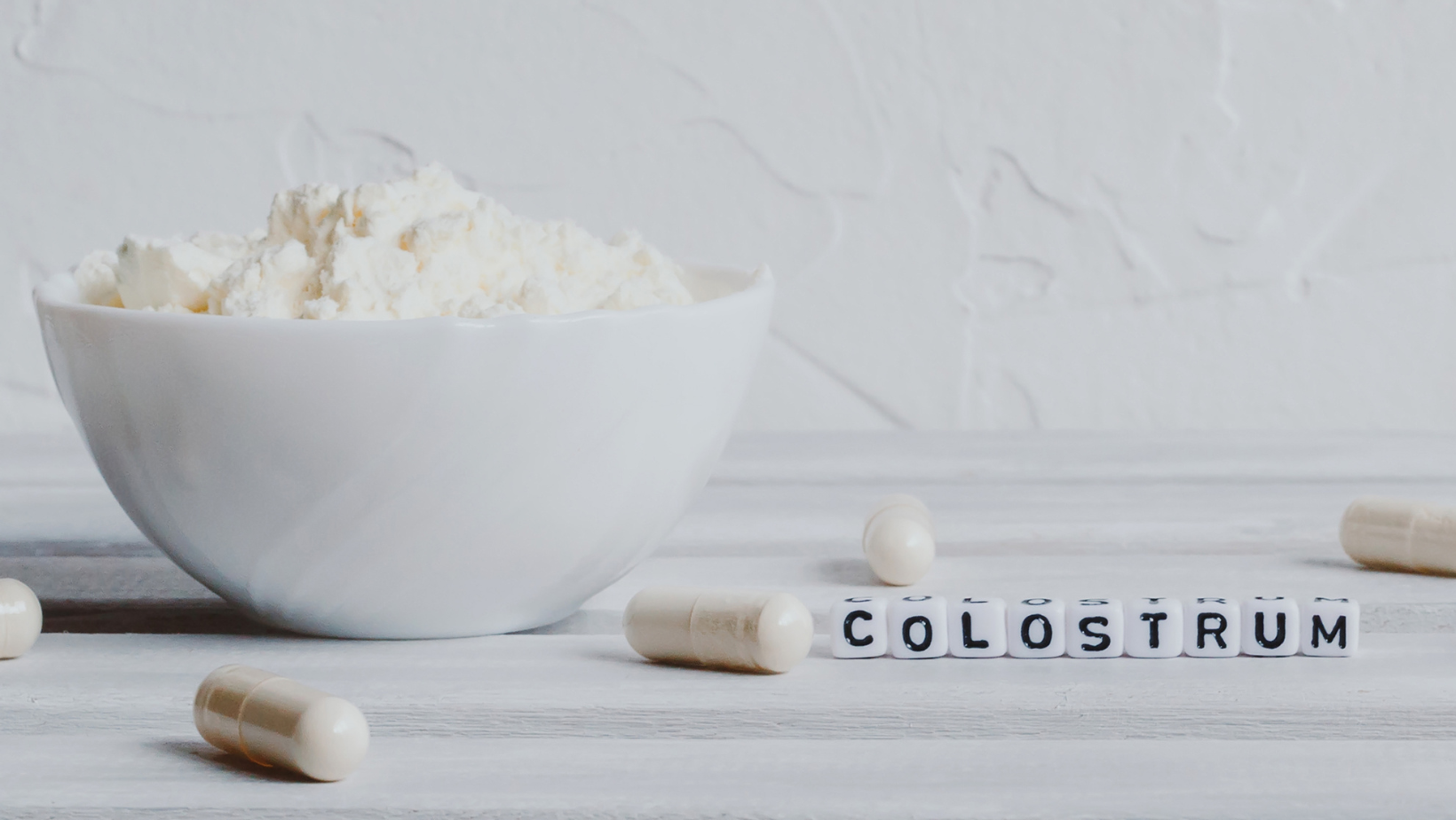
You’ve probably seen it popping up in wellness podcasts, health stores, or even your friend's supplement cabinet: bovine colostrum. Marketed for gut health, immune support, and recovery, this early-life nutrient source for calves is now showing up in adult wellness routines. But is it worth your time and money?
As a lifestyle medicine physician focused on women’s midlife health and longevity, here’s what I want you to know before you jump on the colostrum bandwagon.
Let’s Start With the Basics: What Is Colostrum?
Colostrum is the first form of milk produced by mammals (including humans) in the first few days after giving birth. It’s loaded with antibodies, growth factors, and immune-modulating compounds designed to jumpstart a newborn’s immune system and line the gut.
Bovine colostrum—from cows—is the form used in most supplements. It's freeze-dried and packaged into powders or capsules, and often promoted for:
- Gut barrier support ("leaky gut")
- Immune system priming
- Exercise recovery
- Anti-aging benefits
But let’s be honest: just because something has growth factors doesn’t mean it belongs in your Amazon cart.
Does the Science Support It?
Evidence in humans is limited—but not nonexistent.
Some small clinical studies have shown potential benefits:
Gut health:
In people with NSAID-induced intestinal permeability ("leaky gut"), bovine colostrum has been shown to reduce damage and symptoms.
Immune function:
Some data in athletes suggests reduced upper respiratory infections.
Exercise recovery:
A few studies report improvements in performance, gut comfort, or muscle soreness—especially in endurance athletes.
But these benefits aren’t guaranteed.
And the quality and dosage of colostrum varies widely, with no standardized formulation across brands.
So Should You Take It?
Here’s where my clinical voice kicks in:
Before you reach for colostrum, ask yourself:
- Have you addressed the basics?
- Are you sleeping?
- Managing stress?
- Eating fiber and whole foods?
- Getting enough protein?
- Building muscle?
- Moving your body?
- Supporting your gut with real food (not just powders)?
If the answer is no—then colostrum is not your next step. You’re throwing powdered fuel on an engine that’s missing spark plugs.
Do you have dairy sensitivity?
Colostrum is a dairy product. Even if it's low in lactose, it may not be tolerated by everyone.
Are you already taking quality foundational supplements?
Vitamin D, omega-3s, magnesium, creatine, iron (when needed), and probiotics have stronger bodies of evidence for many women in midlife.
When Might It Be Worth Trying?
Colostrum might be a reasonable add-on if you:
- Have mild gut symptoms (especially post-infectious or stress-related)
- Are recovering from illness or antibiotics
- Train hard and experience frequent upper respiratory issues
- Want to support your immune system during travel or stress
Even then, I recommend:
- A 2–3 month trial only after dialing in basics
- Choosing a third-party tested brand
- Tracking symptoms and benefits
Cost, Hype, and the Bigger Picture
Many women I work with are overwhelmed by supplement costs. Colostrum can run $50–100/month—and that adds up.
So here’s what I tell my patients:
Just because something is trending doesn’t mean it’s essential. And just because it works for someone on TikTok doesn’t mean it’s the right tool for your body right now.
Your body is an incredible machine. When you give it rest, movement, nourishment, and support—it can do amazing things. Colostrum is not magic. It’s just one tool in a very big toolbox.
Bottom Line
- Colostrum may hality sources.
You’re not broken. You might just need a reset—not another powder.
WonderCreek Health Blog

Midlife Female Hair Loss: What’s Actually Happening and How We Treat It

Many of the women who find their way to me share a common story: They’ve seen multiple specialists. Their labs are “normal.” Their symptoms are scattered across systems—joints, gut, mood, hormones, skin—and yet every provider focuses on one piece at a time, never the whole picture. They’ve often been told they’re anxious, dramatic, or “too sensitive.” And yet, they’re also some of the most intuitive, self-aware, and relentlessly curious patients I’ve ever met. They know their bodies. They know something isn’t right. And they won’t stop searching until someone finally sits down and helps them connect the dots. That’s where connective tissue disorders come in. What Do We Mean by “Connective Tissue Disorders”? When I talk about this group of conditions, I’m referring to women who often fall somewhere on the spectrum of: Hypermobility spectrum disorder (HSD) Ehlers-Danlos features Mast cell activation (MCAS) Endometriosis PMDD and other hormone sensitivities POTS or other dysautonomias The common thread? Their connective tissue is different—looser, more fragile, more reactive. And when the scaffolding of the body isn’t as stable, symptoms spill over into every system: joints, vessels, immune response, mood, hormones, digestion, even the brain. Why Midlife Feels Like a Breaking Point Estrogen has always been a stabilizer. It strengthens collagen, calms mast cells, and helps buffer the nervous system. So, it’s no surprise that perimenopause—when estrogen begins to fluctuate dramatically—can feel like the rug is being pulled out. I see women who: Once held things together with sheer willpower Managed PMDD, migraines, or endometriosis in their younger years Suddenly feel like everything has intensified: joint pain, bloating, histamine reactions, mood shifts, insomnia, brain fog For women with sensitive connective tissue and sensitive nervous systems, hormonal shifts don’t just cause hot flashes—they destabilize the entire body. Hormone Therapy for the Orchid Patient Many of my patients have tried hormones before. Sometimes birth control left them moody, swollen, or miserable. Sometimes a patch or pill was prescribed quickly, with no attention to how sensitive their system might be. So when they hear “hormone therapy,” they’re understandably hesitant. This is where my orchid theory comes in. Orchids are not weak flowers—they’re strong, beautiful, and resilient. But they need careful tending. They don’t thrive when thrown into the same soil or light as every other plant. They require patience, precision, and a slower hand. My connective tissue–sensitive patients are orchids. Their bodies respond to hormone therapy, but they need a methodical, gentle approach: Always bioidentical hormones Introduced slowly, step by step Carefully monitored, with adjustments made gradually Combined with lifestyle strategies to support the nervous system and reduce inflammation This is not a “one patch fits all” process. It’s a partnership. And when done thoughtfully, hormone therapy can bring profound relief and stability. Why Sensitivity Is a Strength The women I see are often neurodivergent—ADHD, autistic traits, or simply highly perceptive. They’re often told their sensitivity is a liability, but I see it differently. That very sensitivity is what helps them notice patterns others miss. It’s what fuels their curiosity to keep searching, even after being dismissed. Their intuition about their own bodies is spot on. Yes, their connective tissue is different. Yes, their mast cells fire more easily. Yes, their hormones seem to create more chaos. But these women are also some of the most resilient, resourceful, and insightful people I know. Moving Forward If you see yourself in this description, please know: You’re not “too sensitive.” You don’t have 27 different diagnoses—you have a pattern that makes sense. Hormones are not off the table for you—they may just need to be approached differently. Your lived experience matters as much as your lab results. This isn’t about fixing you—you are not broken. It’s about giving your body the tailored support it’s been asking for all along. This is just the beginning of a series I’ll be writing on connective tissue–related conditions: MCAS, PMDD, endometriosis, and more. Each deserves its own spotlight. But the first step is recognition. You deserve to be seen in your wholeness—not dismissed as “normal” when everything in your body is telling you otherwise.