

Midlife Female Hair Loss: What’s Actually Happening and How We Treat It
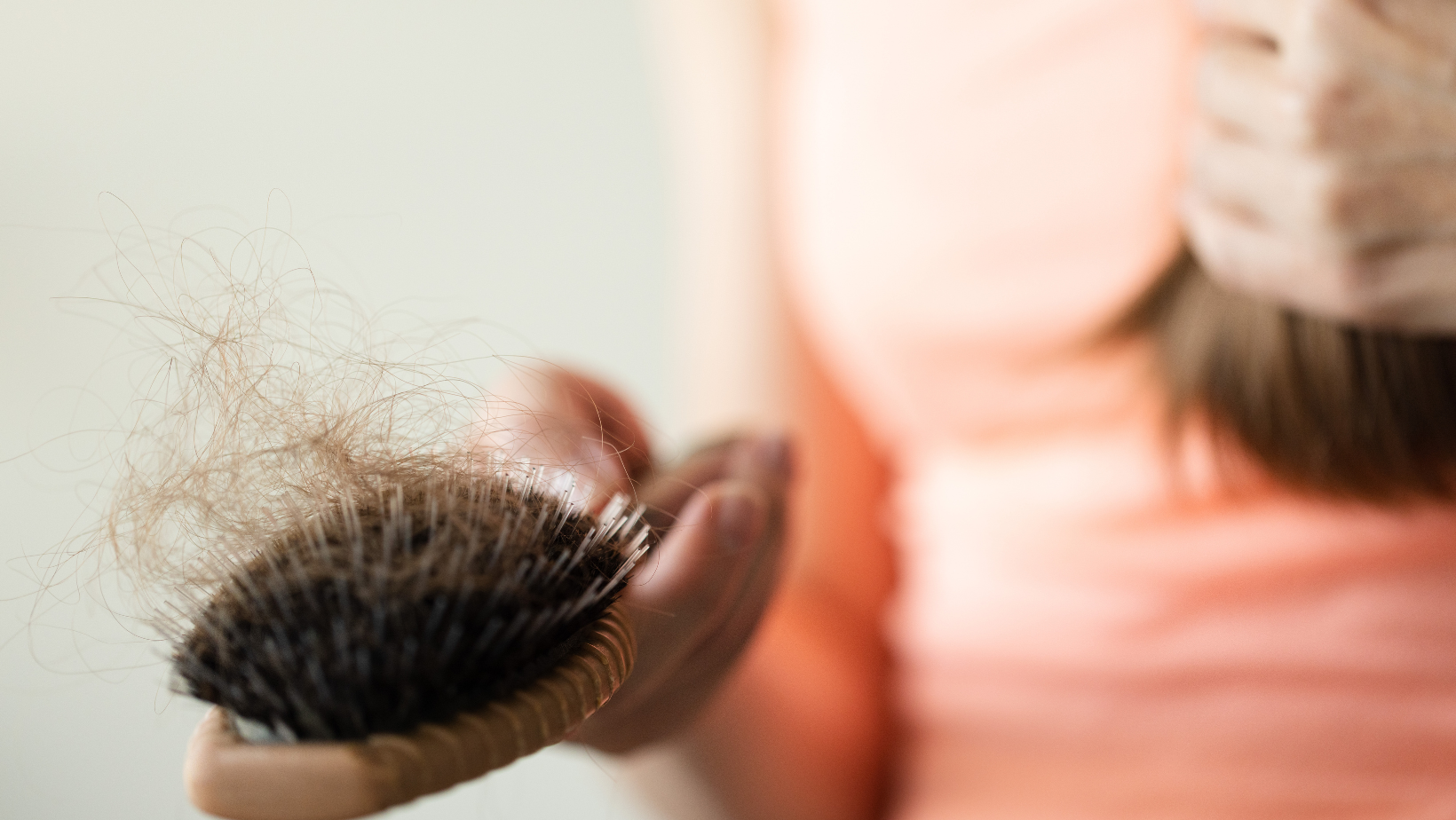
Hair loss is one of the most common and most distressing symptoms women bring up during perimenopause and menopause. Yet many women are told some version of: “It’s normal aging,” “Try biotin,” or “Use this shampoo.”
The truth is much more nuanced.
Hair follicles are highly metabolically active structures that respond to hormones, inflammation, nutrient status, stress physiology, and genetics. During the midlife hormonal transition, several biological changes often happen at the same time. Estrogen and progesterone begin to decline, iron stores may drop, sleep becomes more fragile, and chronic stress can increase.
All of those signals influence the hair growth cycle.
The encouraging part is that once we understand the pattern and the physiology driving it, there are real treatments that help. But the first step is identifying what type of hair loss is actually happening.
The Three Most Common Causes of Hair Loss in Midlife Women
When a woman tells me her hair is falling out, the cause is usually one of three patterns. Many women actually have more than one occurring at the same time.
Female Pattern Hair Loss (FPHL)
Female Pattern Hair Loss is the most common chronic hair loss condition in women and affects up to 40 percent of women by age 50.
Instead of sudden shedding, this develops gradually through a process called follicular miniaturization.
Over time:
- Hair follicles become smaller
- The growth phase shortens
- Each hair shaft becomes thinner
- Overall density decreases
Clinically this often appears as:
- A widening part
- Diffuse thinning across the crown
- Reduced ponytail thickness
Unlike sudden shedding disorders, female pattern hair loss is progressive and strongly influenced by genetics, hormones, and scalp inflammation. The midlife transition often accelerates this process.
Telogen Effluvium (TE)
Telogen effluvium is a sudden shedding disorder.
Women often describe it exactly the same way: “Hair is coming out in handfuls in the shower.”
This happens when a large number of follicles prematurely shift from the growth phase (anagen) into the resting phase (telogen). About two to three months later, those hairs shed all at once.
Common triggers include:
- Hormonal fluctuations in perimenopause
- Illness or surgery
- Rapid weight loss
- Emotional or physical stress
- Thyroid dysfunction
- Low ferritin or iron deficiency
- Long COVID
- Sleep deprivation
- New medications, including GLP-1 medications
Telogen effluvium is usually self limited, but it can last six to twelve months.
One of the most common mistakes clinicians make is treating telogen effluvium alone while missing underlying female pattern hair loss, which is frequently present underneath.
Traction and Mechanical Damage
The third category is mechanical stress on the hair follicle.
This includes:
- Tight ponytails or buns
- Hair extensions
- Frequent coloring or chemical processing
- Heat styling
- Chronic hat friction
- Repeated tension on the scalp
Many women do not realize styling habits can contribute to follicle damage over time.
When traction continues for years, permanent follicle loss can occur.
The Hormone Connection in Midlife Hair Loss
Hair follicles behave almost like tiny endocrine organs.
They contain receptors for multiple hormones including:
- Estrogen
- Progesterone
- Androgens
- Thyroid hormones
- Cortisol
As hormone patterns change during perimenopause and menopause, the scalp environment changes as well.
Estrogen and the Hair Growth Cycle
Estrogen plays a major role in maintaining hair density.
Hair follicles cycle through three stages:
- Anagen – growth phase
- Catagen – transition phase
- Telogen – resting phase
Estrogen helps keep follicles in the anagen growth phase longer.
When estrogen levels decline:
- More follicles shift into telogen
- The growth phase shortens
- Hair shafts become thinner
- Overall density decreases
This is why hair shedding often begins during perimenopause, when estrogen levels fluctuate dramatically. Many women notice waves of shedding that seem to come and go during this transition.
Progesterone and Androgen Balance
Progesterone also plays an important role in follicle biology.
One of progesterone’s functions is inhibiting the enzyme 5-alpha reductase, which converts testosterone into dihydrotestosterone (DHT).
DHT is the androgen responsible for follicular miniaturization in pattern hair loss.
When progesterone declines during perimenopause:
- Less 5-alpha reductase inhibition occurs
- More testosterone converts to DHT
- Hair follicles at the crown become more vulnerable
This is one reason female pattern hair loss often accelerates between ages 40 and 55.
The Role of Stress and Cortisol
Hair follicles are also highly sensitive to stress biology.
Elevated cortisol can push follicles into premature telogen shedding.
Common midlife stress triggers include:
- Caregiving responsibilities
- Work stress
- Sleep disruption
- Night shift schedules
- Chronic illness
- Overtraining
- Undereating or low protein intake
Many women are experiencing multiple stress signals at once, which can amplify hair shedding.
The Labs We Evaluate in Midlife Hair Loss
Hair loss is often a systems biology problem, which is why lab evaluation matters.
Iron studies are one of the first things I check.
Ferritin is especially important because hair follicles are highly iron dependent. You can have normal hemoglobin and still have ferritin levels low enough to cause shedding.
Research suggests ferritin often needs to be above about 70 ng/mL for optimal hair growth. Many women with hair loss have ferritin levels between 10 and 30.
Thyroid function is another key area to evaluate.
Important markers include:
• TSH
• Free T4
• Free T3
Thyroid hormones regulate follicle cycling, and even subtle dysfunction can worsen shedding.
Vitamin D also matters.
Vitamin D receptors are present in hair follicles and play a role in follicle cycling and immune regulation. Many clinicians aim for levels between 50 and 70 ng/mL.
Other labs that may be helpful include:
- CBC
- Comprehensive metabolic panel
- Zinc
- Vitamin B12
- Testosterone
- SHBG
- DHEA-S
- CRP to assess inflammatory shedding
Conditions That Can Mimic Midlife Hair Loss
Dermatologists approach hair loss with a structured differential diagnosis.
Possible contributors include:
• Female pattern hair loss
• Telogen effluvium
• Iron deficiency
• Thyroid dysfunction
• Perimenopause hormone shifts
• Chronic stress physiology
• Post viral shedding, including COVID
• Nutritional deficiencies
• Scalp inflammation such as seborrheic dermatitis or psoriasis
• Autoimmune conditions like alopecia areata
• Traction alopecia
• Medication induced hair loss
Correct diagnosis matters because the treatment strategy depends on the underlying cause.
The Treatment Pyramid
Hair loss treatment works best when approached in layers.
Level 1: Fix the Biology First
Before medications or procedures, we correct reversible factors.
For many women this alone can reduce shedding significantly.
This includes:
- Ferritin optimization, often aiming for 70–100
- Vitamin D optimization
- Adequate protein intake, often 90–120 grams daily
- Omega-3 fatty acids
- Thyroid optimization
- Stabilizing hormonal fluctuations when appropriate
- Improving sleep and stress physiology
- Addressing rapid weight loss or under fueling
One of the most important concepts I explain to patients is this:
“No supplement will overcome low ferritin or low protein. We have to fix the soil before we try to grow the plant.”
Level 2: Evidence Based Scalp Treatments
Topical Minoxidil
Minoxidil remains the gold standard treatment for female pattern hair loss. It improves blood flow to the follicle and prolongs the growth phase.
Common formulations include:
• 2–5 percent topical solution or foam
Results develop gradually and require consistent use for several months.
Ketoconazole Shampoo
Ketoconazole 2 percent shampoo can help reduce scalp inflammation and local androgen activity. It is commonly used one to three times per week as part of a scalp health routine.
Level 3: Oral Medications
Dermatologists increasingly use oral medications when topical treatments are not enough.
- Low dose oral minoxidil has become a popular option for women with thinning hair. Typical starting doses range from about 0.625 to 1.25 mg daily.
- Spironolactone is another option. It blocks androgen signaling and can be especially helpful in women with cystic acne or androgen sensitive hair loss patterns.
- Finasteride or dutasteride may be used in some cases, particularly in postmenopausal women.
Level 4: Procedural Treatments
For women who want additional improvement, procedural therapies may help.
These include:
- Platelet rich plasma (PRP)
- Microneedling
- Low level laser therapy
These treatments often work best when iron levels, hormones, and scalp health have already been optimized.
Supplements: What Helps and What Does Not
Hair supplements are a multi billion dollar industry, but most are supportive rather than primary treatments.
- Collagen may benefit skin and joints but does not regrow hair.
- Biotin helps only if there is a true deficiency, which is uncommon.
- Complex supplement blends may provide mild support, but they do not replace correcting iron deficiency, hormones, or inflammation.
- Omega-3 fatty acids are one supplement that can be helpful because of their anti inflammatory effects.
Setting Realistic Expectations
Hair growth is slow.
Setting expectations early prevents frustration.
Most women see:
• Shedding improvement in about 8–12 weeks
• Density improvement in 3–6 months
• Visible part improvement around 6–9 months
• Maximum results around 12 months
Stopping treatment too soon is one of the most common reasons women believe treatments do not work.
Consistency matters.
The Bottom Line
Hair loss during midlife is extremely common, but it is rarely “just aging.”
It is usually the result of multiple biological factors interacting at the same time, including:
• Hormonal shifts
• Iron deficiency
• Thyroid function
• Inflammation
• Stress physiology
• Genetics
The most effective approach is not chasing miracle products but building a structured plan based on physiology.
When we identify the pattern, correct deficiencies, stabilize hormones when appropriate, and use evidence based therapies, many women experience meaningful improvements in hair density and shedding.
Hair follicles respond slowly, but they do respond. And understanding the biology behind the process is the first step toward getting them back on track.
WonderCreek Health Blog